B2B Demand Generation vs Lead Generation: Why Cheap MQLs Starve Your Sales Team
Why low-cost MQLs rarely become closed revenue, and how to structure B2B Google Ads campaigns around buyer demand rather than form fills.
26 October 20265 min read
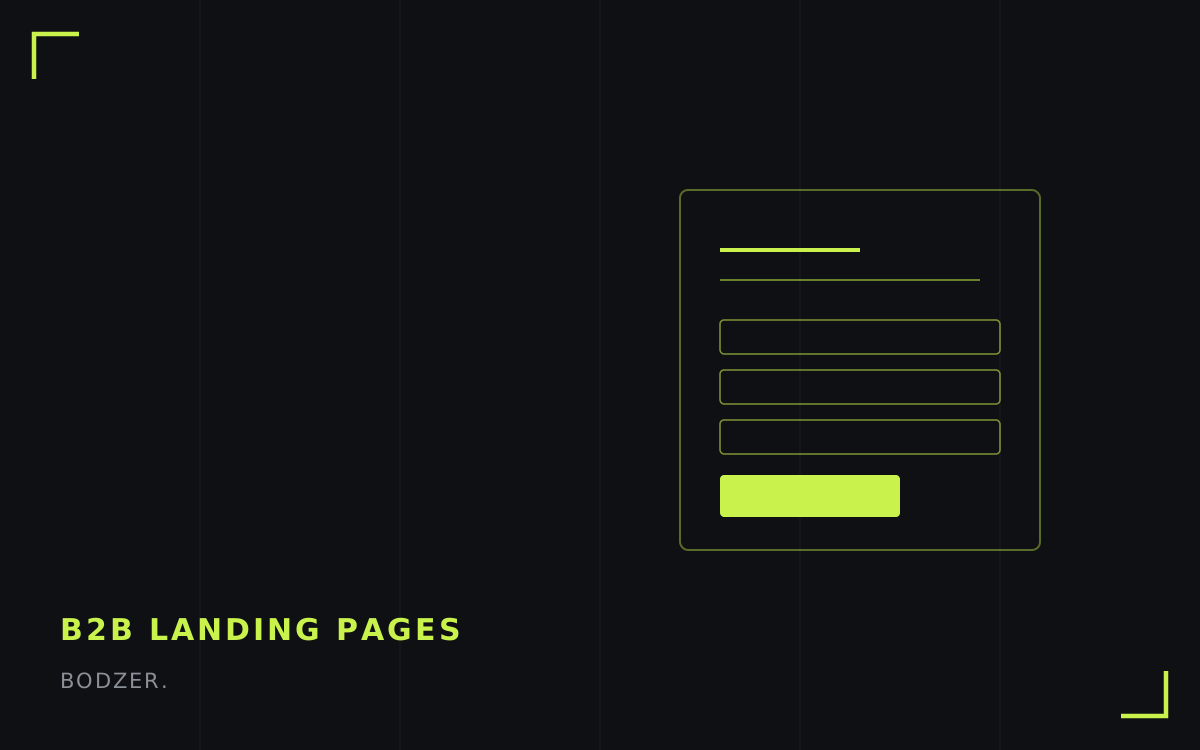
Most B2B landing pages fall into one of two traps.
The first trap is the 12-field corporate interrogation form. It asks for the prospect's direct phone number, postal address, company annual turnover, headcount, and purchase timeframe before they have even seen what the product looks like. Serious buyers bounce in frustration.
The second trap is the frictionless 2-field form. It asks only for a name and email. It generates dozens of submissions at an impressive cost per lead, but 80 percent of them turn out to be job seekers, students, competitors, or personal Gmail accounts.
High-converting B2B landing pages achieve both goals simultaneously: they make it effortless for legitimate buyers to start a conversation, while establishing clear friction gates that turn away non-buyers automatically.
Here is the architecture I use to convert enterprise search traffic into qualified pipeline.
Marketers spend months debating whether to use short forms or long forms. That debate misses the psychology of the B2B buyer.
A qualified decision-maker does not object to answering relevant questions. If a VP of Marketing is looking to hire a senior specialist to rebuild their tracking and PPC infrastructure, they want to provide their domain name and current ad spend bracket. It shows them that the specialist handles complex operations.
What buyers object to is bureaucratic friction:
Friction is a design tool. You add friction where you need qualification, and you strip friction where it causes hesitation.
Across high-performing B2B landing pages in tech, SaaS, and professional services, a 4-field layout delivers the optimal balance of conversion rate and lead quality:
@gmail.com or @yahoo.com) immediately filters out casual consumers and students.On my own contact pages, I provide a quick 4-field version alongside a detailed option. Serious prospects with clear briefs frequently choose the detailed form because they want to share their numbers upfront.
The call-to-action button is the final commitment gate. A generic button that says "Submit", "Send Message", or "Get in Touch" communicates risk. It sounds like joining a mailing list or triggering an automated sales phone call.
Replace generic copy with a specific deliverable and timeline:
As I discussed in my guide on writing ad copy that converts, clarity always beats cleverness. When a buyer knows exactly what happens in the next ten minutes, hesitation disappears.
Senior executives have developed immunity to generic marketing claims. Phrases like "industry-leading solution", "world-class support", and "innovative platform" carry zero persuasive value.
Replace marketing claims with concrete proof assets placed above the fold:
Do not wait for your sales reps to disqualify bad leads manually. Build self-qualification into your landing page design:
Audit Your B2B Conversion Funnel
Are your landing pages leaking high-intent search clicks? Open my B2B Negative Keyword Master List and Audit Checklist (Google Sheets) to audit your forms, messaging, and campaign settings.
In B2B, a landing page is not an obstacle course designed to trap email addresses. It is a digital presentation across a table to a smart business owner.
When your landing page respects the buyer's time, answers their technical questions, and makes qualification straightforward, your conversion rates rise and your sales team receives leads they are eager to close.
If you want your B2B paid search campaigns paired with high-converting, dedicated landing pages, explore my B2B PPC services, or submit a brief to discuss your project.
The first call is free, whatever the service. Book 60 minutes in my calendar, and the Google Meet link gets added automatically.
More posts
Why low-cost MQLs rarely become closed revenue, and how to structure B2B Google Ads campaigns around buyer demand rather than form fills.
How venture-backed and bootstrapped B2B SaaS companies scale paid search pipeline profitably while keeping customer payback periods under twelve months.
A step-by-step engineering guide to passing GCLID data and CRM lifecycle milestones back to Google Ads for value-based revenue bidding.
Free first call
We'll figure it out. Book a free 60-minute meeting in my calendar for any digital question or challenge, and we'll find the right way forward together.
Can I use cookies?
I'd like to measure what works on the site and in my ads. Everything works without them too, I just can't see where you came from. What I store